ARS harvesting shears – for picking and floristry
Harvesting shears are not built for woody branches but for stalks, stems and flowers. The blade is more pointed and thinner, so you can reach the exact cutting point inside a dense bunch or canopy without damaging the crop. Two models are available, weighing 100 and 110 grams. For thicker branches, pruning shears are the right tool.
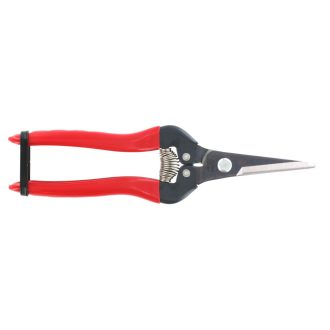
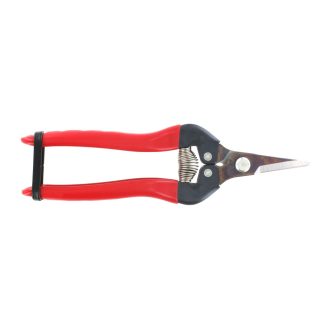
The two models
The choice depends on the work: a shorter blade for finer control, a longer one for thicker stems.
| Model | Overall length | Blade length | Weight | Best for |
|---|---|---|---|---|
| 300SS | 170 mm | 31 mm | 100 g | Dense grape bunches, floristry, precise work |
| 300L | 190 mm | 46 mm | 110 g | Thicker stalks, vegetable stems |
How do they differ from pruning shears?
Pruning shears give more cutting force for woody branches, at the cost of finesse on delicate stems. With harvesting shears the emphasis is on accuracy and protecting the crop. If you also cut thinner branches, the 12 mm capacity ARS 140DX series is likewise suited to harvesting, and for pure floristry the stainless-steel ARS FL-18 flower shears is made for the job.
Cleaning and storage
Fruit juice and plant sap on the blade quickly form a sticky layer that degrades the cut and can carry pathogens from plant to plant. Wipe the blade after use with the ARS GO-1 blade cleaner. For carrying and storage, the pruning shears case is recommended.
Frequently asked questions
What are harvesting shears for?
Harvesting grapes, fruit and vegetables, and for floristry work. They are not for woody branches; pruning shears are the tool for that.
What is the difference between the 300L and the 300SS?
The 300L has a 46 mm blade, the 300SS a 31 mm one. The longer blade suits thicker stems, the shorter one gives finer control.
How should I clean the blade?
Wipe it after use. Dried fruit juice and plant sap dissolve with the ARS GO-1 blade cleaner.