ARS straight pruning saws – an even kerf on flat surfaces
A straight blade gives a more even kerf on flat surfaces, in boarding work and in woodworking than a curved blade. It is also a practical choice for camping and DIY. The range covers 11 models, mostly in folding form.
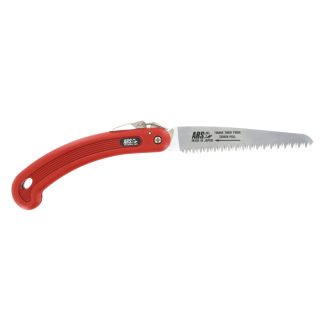
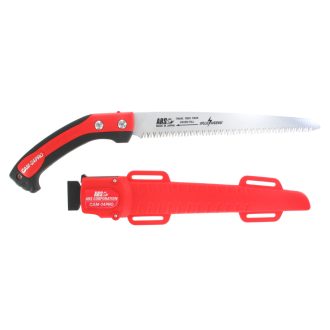
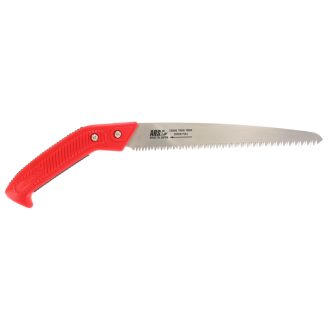
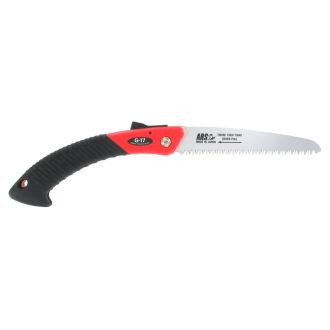
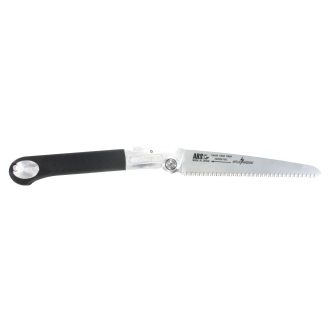
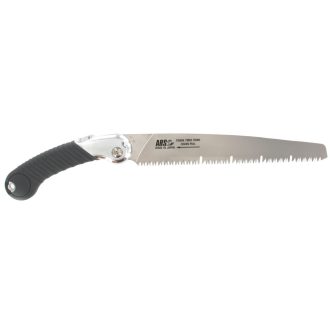
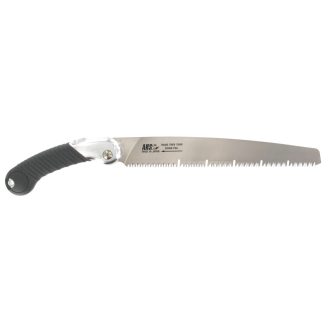
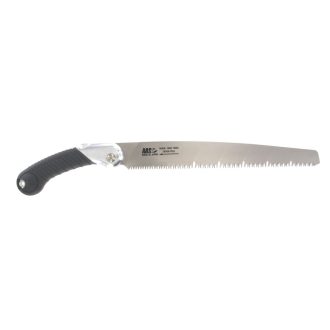
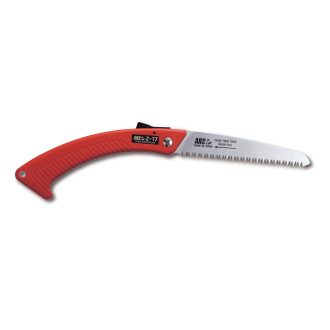
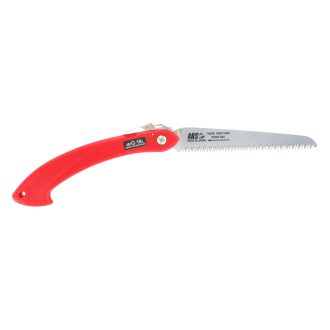
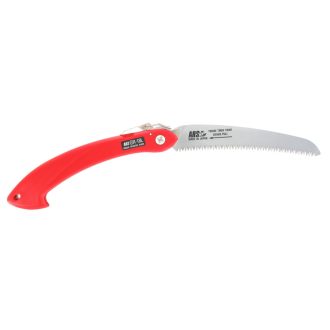
The straight-bladed models
| Model | Blade length | Cutting capacity | Tooth pitch | Design |
|---|---|---|---|---|
| Z-17 | 170 mm | 65 mm | 4.0 mm | Folding |
| G-18L | 180 mm | 70 mm | 4.0 mm | Folding |
| PM-21L | 210 mm | 70 mm | 4.0 mm | Folding, all-metal |
When to choose a straight blade
When accuracy and evenness matter: boarding, cutting battens, woodworking, or any flat surface. In living wood a curved blade is more efficient because it bites in as you pull, but on a flat surface that same curve causes unevenness.
Z-17 or G-17?
This is the most common question in this category. The Z-17 is straight, the G-17 is curved, otherwise identical in size. They share the same replacement blade, the G-17-1, so if you later prefer the other blade shape you do not need a new tool.
Maintenance
On these models the teeth are not impulse-hardened, so they can be sharpened with the ARS 9F-10. Dried resin dissolves with the ARS GO-1 blade cleaner, and replacement blades are in the blades and saw blades category.
Frequently asked questions
When is a straight blade better than a curved one?
On flat surfaces, in boarding and woodworking, where an even kerf is what matters. In living wood a curved blade is more efficient.
What is the difference between the Z-17 and the G-17?
Only the blade shape: the Z-17 is straight, the G-17 curved. Their size and replacement blade are identical.
Can a straight saw be sharpened?
Yes, on these models the teeth are not impulse-hardened, so they can be maintained with the ARS 9F-10.