ARS pruning shears – Japanese precision in the garden
ARS has been making garden tools in Japan since 1929. The range covers 29 pruning shears by hand size and cutting capacity: the 130DX series for smaller hands, the 120DX for a universal grip, and the VS series with the KWF Profi quality mark for professional daily use.
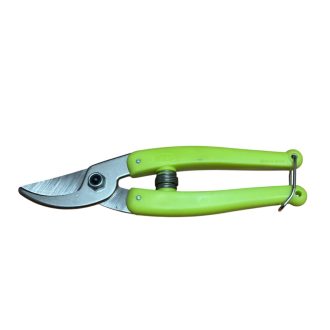
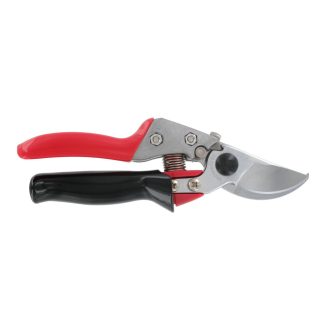
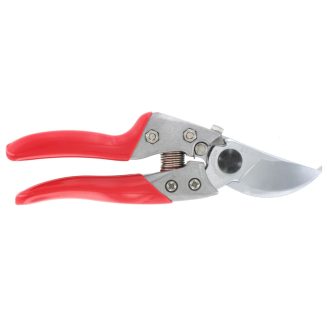
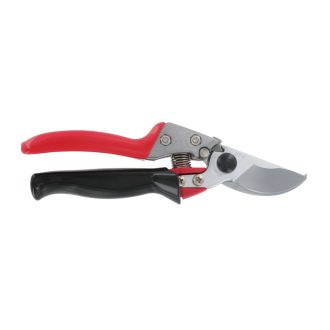
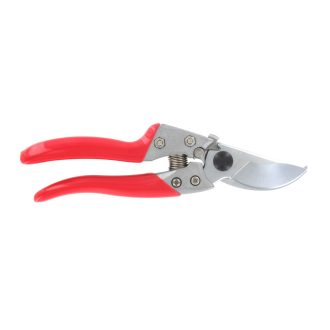
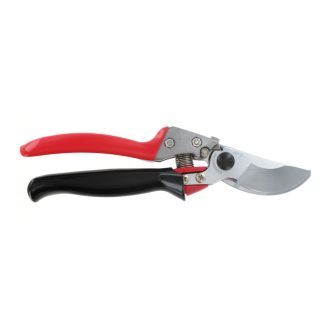
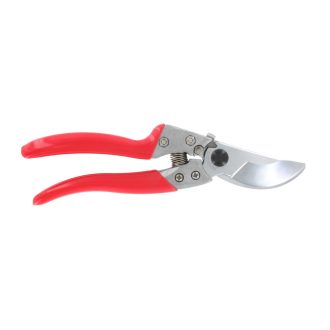
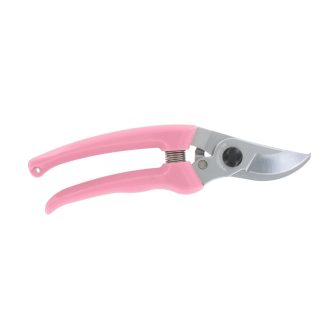
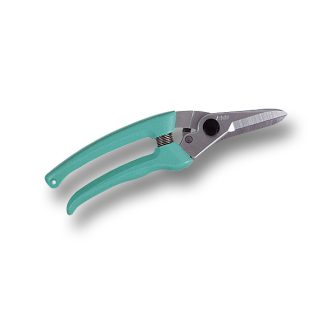
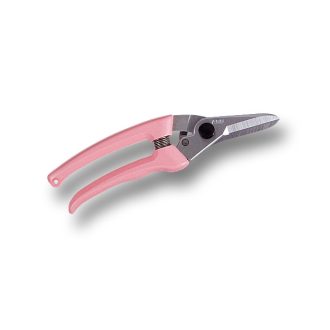
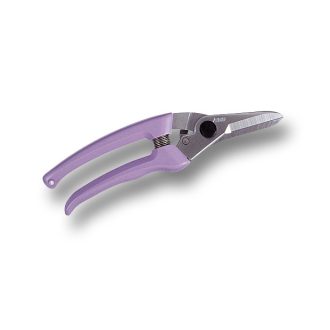
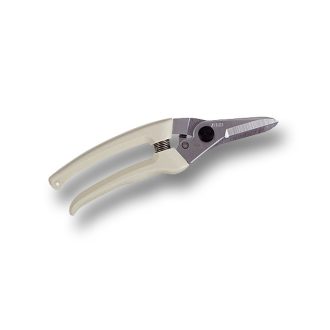
How to choose pruning shears
1. Hand size
This is the most important factor and the one most often skipped. Shears that are too large force your hand to spread wide to open them, which becomes painful after a few hundred cuts. ARS builds for three hand sizes: small (S), medium (M) and large (L), plus a universal version.
2. Cutting capacity
This tells you how thick a branch the tool will cut in one action. The range runs from 12 mm to 25 mm. Note that the figure applies to living, sappy wood. On dry or hard wood a thinner branch can already overload the tool, which is what the anvil-design VA series is built for.
3. Bypass or anvil?
On a bypass pruner two blades pass each other like scissors. It leaves a clean cut face on living wood, which makes it the right choice for the vast majority of pruning. On an anvil pruner a single sharp blade presses onto a blunt surface: more force for hard and dead wood, at the cost of compressing living branches slightly.
The ARS pruning shear series
| Series | Hand size | Cutting capacity | Characteristics |
|---|---|---|---|
| 140DX | Small (S) | 12 mm | Fine work, floristry, harvesting. Six colours |
| 130DX | Small (S) | 19 mm | For home gardeners and florists. Six colours |
| 120DX | Universal | 22 mm | If you would rather not choose by hand size |
| 120EU-R | Medium (M) | 10 mm | Developed specifically for rose pruning |
| VS series | S / M / L | 19–25 mm | Professional, KWF Profi mark. Fixed (Z) and rotating (R) handles |
| CB / FB | S / universal / L | 19–25 mm | One-handed lock, shock absorption |
| VA series | Universal | 22–25 mm | Anvil design for hard and dead wood |
Accessories and maintenance
What determines the working life of good pruning shears is not the number of cuts but the quality of maintenance. Dried plant sap on the blade increases friction and can carry pathogens from one plant to the next; the ARS GO-1 blade cleaner dissolves it. For keeping the edge, see the sharpeners category, and for carrying, the pruning shears case. Wearing parts, blades and springs are available separately in the blades and saw blades and component categories.
When you need to cut thicker branches
Above twenty-five millimetres, pruning shears are no longer enough. That is where loppers (30–50 mm), saws, or for high branches telescopic loppers come in. For a high daily cut count, electric pruning shears are also worth considering.
Frequently asked questions
Which ARS pruning shears should I start with?
If you cannot measure your hand, the universal ARS 120DX is the safest choice with a 22 mm cutting capacity. For smaller hands, the 130DX series is recommended.
What do the Z and R markings mean on the VS series?
Z denotes a fixed handle, R a rotating one. The rotating handle follows the natural movement of your wrist, which noticeably reduces fatigue during longer sessions.
Can ARS pruning shear blades be sharpened?
Yes, keeping to the factory bevel angle. Diamond sharpeners are made for this, and you will find them in the sharpening category. If the blade is too far worn, it can be replaced separately.
What warranty do ARS tools carry?
The manufacturer offers a 25-year warranty on pruning shears, and every wearing part is available separately, so the tool stays repairable in the long term.